I received a reusable parcel
C0 · Hero

Reuse, reusable, recyclable: understanding the differences.

Reusable, reused, recyclable: when it comes to packaging, these words do not mean the same thing. Reusable packaging serves the same purpose several times over and stays recyclable at end of life. This page explains what the law says, what the status quo costs, and how the reusable parcel works in e-commerce as well as in your business flows.

C0b · Le constat (copie de H0b)

More and more packaging.

1.7billion

parcels shipped every year in France.

ARCEP

+10%

more online orders in a year: 3.2 billion transactions in 2025.

FEVAD 2025

7.5Mt

of professional packaging placed on the market every year in France.

ADEME

12.5Mt

of packaging placed on the market and then thrown away every year in France, more than half of it by businesses.

French Ministry for Ecological Transition

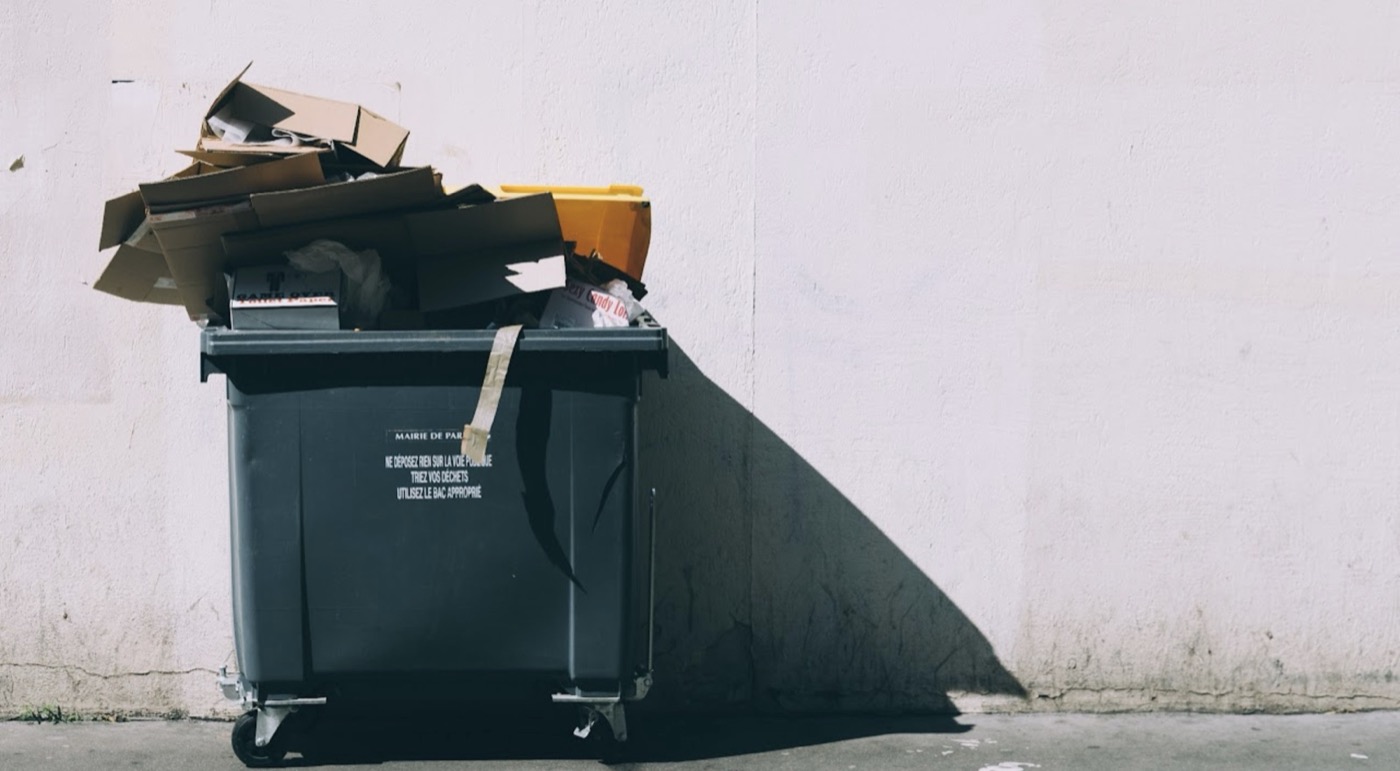
Skip filled with discarded packaging
H1 · L'enjeu

Packaging, a strategic issue.

Regulatory

  • AGEC law (France's anti-waste and circular economy law): 10 % reused by 2027
  • PPWR (Packaging and Packaging Waste Regulation): 40 % by 2030, 70 % by 2040
  • REP pro (France's extended producer responsibility scheme for professional packaging): from 2027

Economic

  • Raw materials: +26 to +46 % since 2015
  • End of disposable plastic
  • TEOM (France's household waste collection tax): +40 % over 10 years

Supply

  • Recycled materials: +64 % since 2015

Reuse target

  • 1.8 % observed in France (2026)
  • 10 % by 2027 (AGEC)
  • 40 % by 2030 (PPWR)
  • 70 % by 2040 (PPWR)

Material cost trend

  • Corrugated board and packaging: +39 % since 2015
  • Virgin plastics: up to +75 % at the 2022 peak
  • Recycled materials: +64 %

SourcesAGEC law art. 67, Decree 2022-507, Regulation (EU) 2025/40, INSEE.

H2 · Le risque

The cost of the status quo.

Doing nothing

Without support from producers, the industry won't scale. On the day the deadline hits, you'll have to scale within an industry that still needs to get organized. That means operational scramble and high costs.

Doing it badly

  • Packaging that's never returned is disposable packaging paid for at a premium.
  • A solution whose collection and reconditioning process isn't optimized will always cost more than disposable packaging.

Disposable packaging keeps getting more expensive. Doing nothing tracks the disposable cost, then jumps at the deadline. Reuse costs more at first, then drops after the deadline.

The question is no longer “Will you have to switch?”It's “How?”

H3 · Deux verrous

Two prerequisites for reusable packaging to perform.

Designing
the right
containers

Without the components that optimize how they're put back into service, reconditioning isn't efficient. Their design also has to account for the constraints of order preparation: closing fast, with no consumable to add (zip ties, tamper seals), on mechanized lines.

Industrializing
the reuse
supply chain

For the model to perform, the collection and reconditioning chain has to be built at industrial scale, with the fleet managed to maximize the return rate.

Shipping, delivery, collection, reconditioning, redelivery: a loop.

H4 · Définition

Reusable packaging is packaging designed to come back.

What the law says

2minimum uses to count as reused packaging

1st use collected, inspected, refurbished every cycle proven 2nd use same use
  • Reusabledesigned to be reused at least twice in the same logistics context: B2B, B2C or C2C.
  • Proof of reusefor every cycle: that's what traceability is for.
  • Recyclableat end of life.

Decree No. 2022-507; Regulation (EU) 2025/40 for recyclability

H5 · Changement de référentiel

New model,
new cost structure.

With disposable packaging, you buy a new unit for every shipment.
With reuse, you buy the service that gets it back.

Cost structure of a shipment

Disposable packaging

Buying the packagingfor every shipment Consumablestape, padding Eco-contributionREP End of life

Reused packaging

Packagingdepreciated over its cycles Collection Reconditioning Traceability

Switching to reuse puts you in a circular economy.
You're no longer buying a consumable,
you're buying shipping capacity.

Cost per shipment by return rate, with MOBIUSpack closure, without closure, and single use.

An omnichannel solution

Click & collect

Over 98 %return rate

  • Return rateOver 98 %
  • Reverse logistics costLow
  • Consumer effortLow

Pickup point / locker

Up to 71 %return rate

  • Return rateUp to 71 %
  • Reverse logistics costModerate
  • Consumer effortLow

Home delivery

Up to 35 %return rate, without a deposit

Low performance without a financial incentive

  • Return rateUp to 35 % without a deposit
  • Reverse logistics costHigh
  • Consumer effortHigh

“What determines the cost isn't the packaging: it's how well it's returned, and the cost of collection and reconditioning.”

H5b · Financement

Funding this transition

MOBIUSpack supports you in filing funding applications with eco-organizations to kick-start this shift. Calls for projects are opened by eco-organizations and fund studies, pilots and investments for moving to reuse*.

Citeo

Citeo · “Encore plus de réemploi” call for projects (“Even More Reuse”)

50%of eligible costs, solo
70%in a business consortium
  • Staff time
  • Pilot rollout
  • Studies
  • Customer communication

Join our coalition

Léko

Léko

Léko

An eco-organization for household packaging, like Citeo. Eco-organizations must devote at least 5 % of the contributions they collect to developing reuse: that's the budget that funds these projects.

* Subject to approval of the application by the eco-organizations.

H8 · FAQ et contact

Your questions, our answers.

The questions we are asked most often about reusable packaging. To go further, read our analysis on the blog.

01

What is reusable packaging?

Packaging designed to be reused at least twice in the same logistics context, B2B, B2C or C2C. Every reuse has to be proven, and the packaging stays recyclable at end of life.

02

Reuse or preparing for re‑use: what's the difference?

Reuse means putting the packaging to the exact same use it was designed for: a parcel making another delivery, without ever having become waste. Under France's environmental code, “réutilisation” (preparing for re‑use) covers a product that became waste and is then used again. In everyday language, people often say “reusable” for both.

03

Is my business affected?

If you place packaging on the market in France, almost certainly. The 2022 decree sets a minimum share of reused packaging, which rises every year based on your revenue, up to 10 % in 2027. The European PPWR regulation adds targets for transport and e-commerce packaging starting in 2030.

04

What do the AGEC law and the PPWR regulation say?

AGEC sets a target of 10 % reused packaging by 2027. The PPWR aims for 40 % reusable transport and e-commerce packaging by 2030, then 70 % by 2040.

05

Does reuse cost more than disposable packaging?

Not necessarily. Its cost depends on the return rate, the number of cycles, and the cost of collection and reconditioning. It should be compared with the full cost of disposable packaging: a new purchase for every shipment, consumables, the eco-contribution, and end of life.

06

Are there grants available for switching to reuse?

Yes. Citeo and ADEME fund part of the cost of reuse studies and pilots. We help you put together the application.

07

Is reuse really better for the environment?

Yes, on two conditions: the packaging has to come back often, and its return has to travel on routes that already exist. That's why we manage the return rate and scale up collection.

08

How many cycles does a reusable packaging unit go through?

It depends on the return rate: at 71 %, a packaging unit is used an average of 3.4 times. Our packaging is designed for dozens of cycles.

09

Do I need to change my processes?

No. Our packaging closes in a single motion during order preparation, and traceability can start with a scanning app, with no development work needed.

10

Who collects and reconditions it?

We organize collection on existing networks and manage reconditioning.

1 / 10

30 minutes to scope your case

Book a slot for an initial conversation about your flows and volumes.